Islamophobia Hub
The APPG on British Muslims defines Islamophobia as: “Rooted in racism, Islamophobia targets expressions of Muslimness or perceived Muslimness.”
Some examples include:
- Physical and Verbal Attacks: Targeting Muslims, mosques, or Islamic institutions.
- Stereotyping: Labeling Muslims as “terrorists” or women in Islamic dress as “oppressed.”
- Media Misrepresentation: Publishing biased or harmful narratives about Muslims.
Workplace Discrimination: Denying employment opportunities or creating hostile work environments through stereotyping and bias.
Islam is a faith followed by over 1.9 billion people worldwide. Rooted in the teachings of the Prophet Muhammad (peace be upon him), Islam emphasises justice, compassion, and community. Its core practices, known as the Five Pillars, guide Muslims in their faith and daily lives:
- Shahada (Faith): Declaration of belief in one God and the prophethood of Muhammad.
- Salah (Prayer): Daily prayers performed five times a day.
- Zakat (Charity): Giving to those in need, promoting social equity.
- Sawm (Fasting): Observed during the month of Ramadan to cultivate self-discipline and empathy.
Hajj (Pilgrimage): A once-in-a-lifetime journey to Mecca for those who are able.
Muslims come from diverse ethnicities, cultures, and backgrounds, reflecting the global nature of Islam. In the UK, the Muslim population is vibrant and varied:
- 46% of Muslims are 24 years old or younger.
- They hail from numerous ethnic groups, including South Asian, Arab, African, and white converts.
- Muslims are represented in every profession, from doctors and teachers to artists and politicians.
What is MCB doing about Islamophobia?
The Muslim Council of Britain (MCB) leads efforts to combat Islamophobia by:
- Advocating for Change: Supporting the APPG definition of Islamophobia to build awareness.
- Empowering Communities: Hosting leadership programs, voter registration drives, and mosque consultations.
- Monitoring Media: Through its Centre for Media Monitoring, the MCB ensures fair representation of Muslims in the media.
- Multifaith Dialogue: Collaborating with other faith groups to promote interfaith understanding and solidarity.
- Education and Community Engagement: Developing educational resources and campaigns to foster awareness of Islamophobia.
Some of our key work and participation include:


Recent Islamophobia Updates from MCB
Defending Mancunian Muslims: MCB challenges Rupert Lowe’s absurd comments on BBC radio
MCB Launches Latest Mosque Safety and Security Guidance
Gorton & Denton By-Election Results
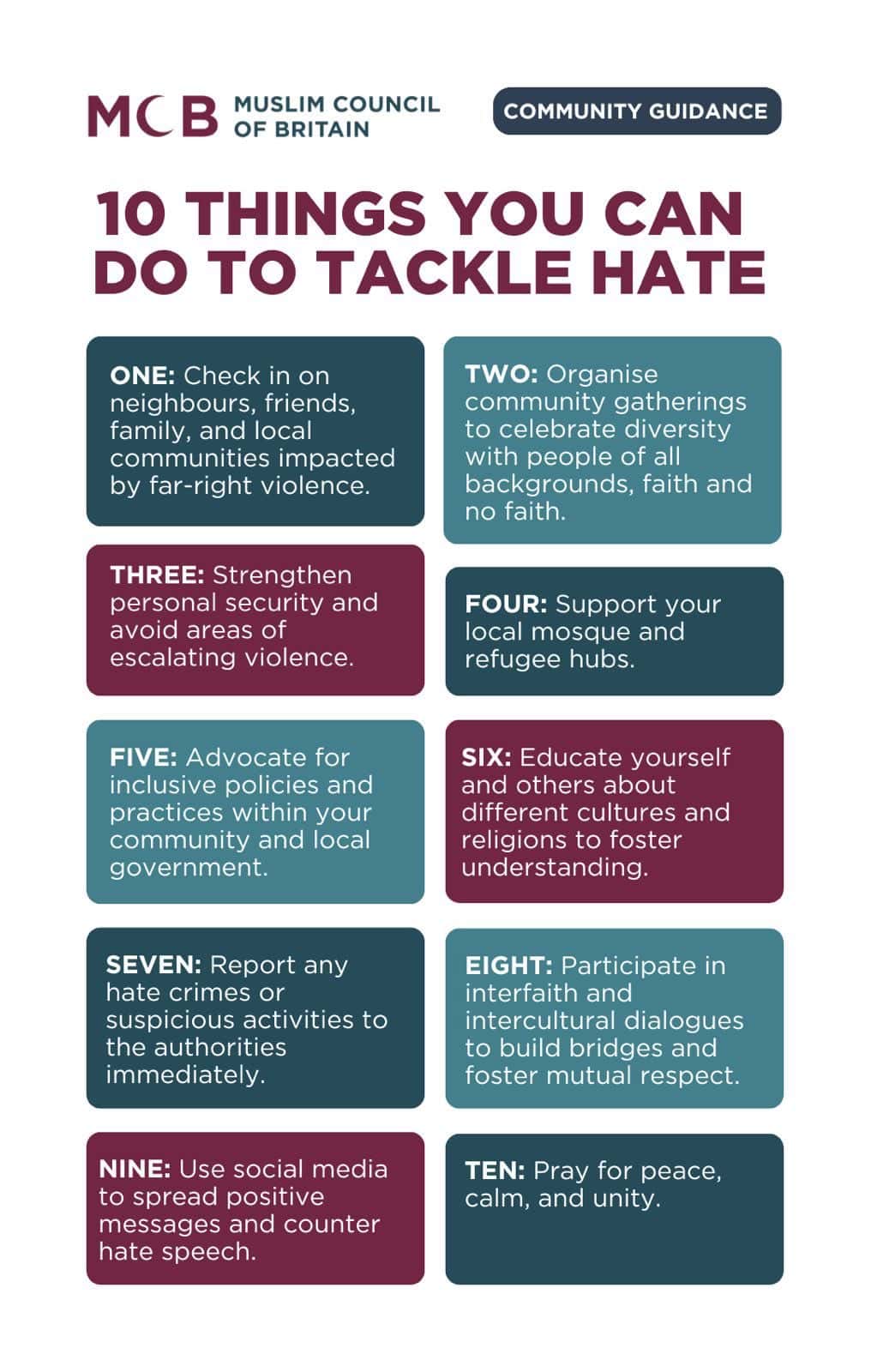
How can I be an ally?
Islamophobia is a societal problem that impacts not just Muslims but the principles of equality, fairness, and justice that underpin any inclusive community. While Muslims often bear the brunt of Islamophobia, allies—especially non-Muslim allies—play a critical role in dismantling it.
What does it mean to be an ally?
Being an ally means actively supporting Muslims in your community and standing against Islamophobia. Here’s how you can help:
- Educate Yourself: Learn about Islam and the contributions of Muslims to society.
- Speak Up: Challenge stereotypes and Islamophobic comments when you hear them.
- Build Relationships: Engage with Muslim communities through events like mosque open days.
- Advocate for Change: Support policies and practices that promote inclusivity and equity.
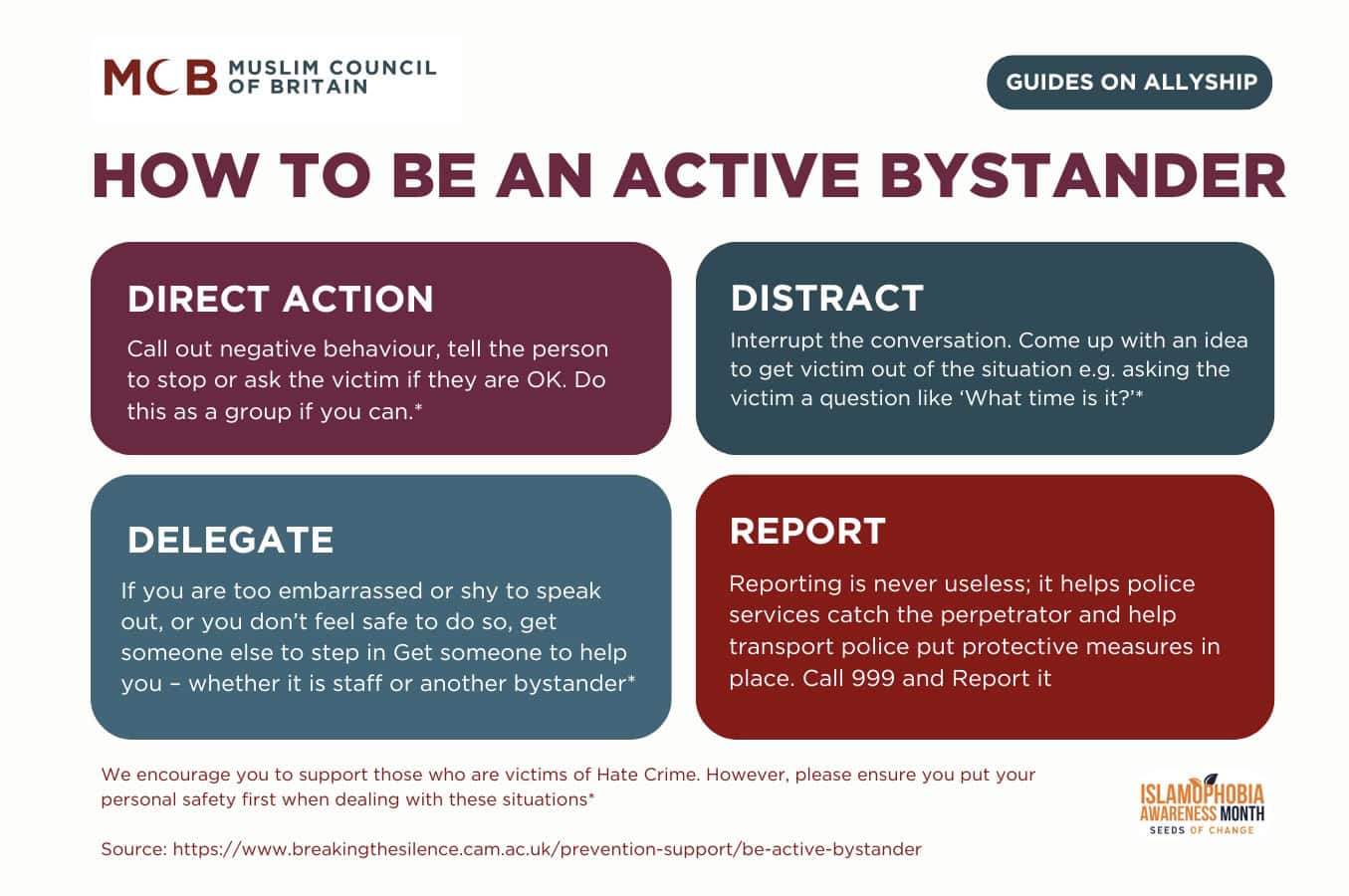
Be an active bystander
Islamophobia thrives in silence. Whether it’s a hateful comment, a discriminatory act, or a misinformed stereotype, allowing such behavior to go unchallenged creates a culture where bigotry can grow.
Being an active bystander means noticing when something is wrong and taking steps to address it. It’s about using your voice, actions, and influence to stand up for what’s right.
Resources to learn more

Defining Islamophobia: A Contemporary Understanding of How Expressions of Muslimness are Targeted
The report expands upon how Islamophobia has been defined by the APPG on British Muslims and establishes a framework of reference that helps determine what does (and does not) constitute Islamophobia. It addresses key concerns and objections that have been levelled against the definition through a series of expert contributions and, importantly, looks at how we can operationalise this most preeminent definition of Islamophobia so as implement practical measures to tackle Islamophobia across civil society.